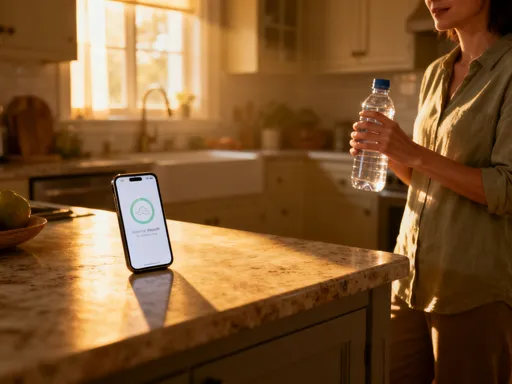
What If Your Family Could Stay Healthy Without the Daily Chaos?
Imagine trying to keep everyone in your family on track—meds, check-ups, diets—but it feels like juggling knives. You’re not alone. Between work, kids, and life, health often slips through the cracks. What if simple tech tools could quietly organize it all, not by adding more tasks, but by making them disappear? This isn’t about futuristic gadgets—it’s about real, gentle help that fits into your real life. The kind of help that doesn’t demand your attention but gives you more of it. You already care deeply. What you need isn’t more willpower—it’s a smarter way to let that care flow effortlessly through your days.
The Hidden Stress of Managing Family Health
Let’s be honest—keeping a family healthy isn’t just about eating veggies or getting enough sleep. It’s about remembering which child needs a nut-free lunch, when your partner’s prescription runs out, and whether your aging mom took her blood pressure pill this morning. It’s the 9 p.m. panic when you realize no one packed your daughter’s inhaler for school. It’s the guilt that creeps in when your son mentions his stomach hurt all day—maybe because he ate the wrong cereal again. These aren’t signs of failure. They’re signs of being human in a world that expects us to remember everything, all the time.
I remember one Tuesday morning when I was rushing to get the kids out the door. Lunchboxes were packed, backpacks zipped, and just as my youngest climbed into the car, I saw the container of granola bars I’d tucked in—loaded with almonds. My heart dropped. My daughter has a nut allergy. We made it to school in time to stop her from eating one, but the fear stayed with me all day. That’s the thing about family health—it’s not just physical. It’s emotional. Every close call, every forgotten dose, every missed appointment chips away at your sense of calm. You start to feel like you’re always one step behind, even when you’re doing your best.
And it’s not just the big things. It’s the quiet patterns—your husband skipping breakfast again, your teenage niece avoiding meals, your dad saying he’s fine when his steps have slowed. These moments matter. But without a system, they’re easy to miss. We carry the weight of everyone’s well-being on our shoulders, and over time, that weight becomes exhaustion. The truth is, no one should have to rely solely on memory and willpower to protect the people they love. We need support that’s as constant as our care.
Why Traditional Methods Fall Short
For years, I thought the answer was better organization. I tried color-coded calendars, sticky notes on the fridge, even a whiteboard in the kitchen. I’d write down appointments, meds, and dietary rules with the best intentions. But life happens. A grocery list gets tossed with the recycling before the store. A doctor’s appointment is circled in red—then buried under a pile of school flyers. A reminder on my phone goes off while I’m helping with homework, and by the time I look, I’ve forgotten what it was for.
These methods don’t fail because we’re careless. They fail because they’re not designed for real life. Real life is noisy, messy, and full of interruptions. Paper can’t talk to your phone. A sticky note won’t follow you to the pharmacy. And your memory? It’s amazing, but it wasn’t built to track five people’s health details at once. I once gave my son the wrong dose of his allergy medicine because the instructions were scribbled on a receipt in my wallet. It was a small mistake—half a teaspoon too much—but it shook me. How many other things was I getting wrong without even knowing?
The cost isn’t just in missed doses or forgotten appointments. It’s in the background hum of anxiety. The nights you lie awake wondering if you should call the doctor. The way you snap at your partner because you’re overwhelmed. The guilt when your mom says she forgot to walk today, and you realize you didn’t check in. These systems don’t just fall short—they wear us down. They turn care into a source of stress instead of connection. We need something that works with us, not against us. Something that doesn’t add to the load but lifts it.
How Health Tools Step In—Without Taking Over
Here’s the good news: help is here, and it’s simpler than you think. I’m not talking about complicated medical devices or apps that feel like a second job. I’m talking about everyday tools—like the ones already on your phone—that can quietly support your family’s health. Think of them as a gentle backup system, not a replacement for your care. They don’t judge. They don’t nag. They just help you remember, track, and support—without demanding your attention.
Take medication reminders, for example. Most smartphones have built-in health apps that let you set alerts for different family members. You can label them—“Dad’s blood pressure pill,” “Emma’s allergy dose”—and choose gentle sounds, not alarms that make everyone jump. When the time comes, a soft chime reminds the person—or you, if they need help. No more guessing if the dose was taken. No more double-checking. Just peace of mind.
Then there are nutrition trackers. I used to stress about my teenager’s eating habits, but instead of lectures, I started using a simple food journal app we both access. She logs her meals when she remembers, and if she skips a day, I don’t scold—I just send a sweet emoji or a “Hope you’re feeling okay today.” It’s not about control. It’s about staying connected. And when the app shows she’s been low on iron, we can talk about adding more spinach or beans—without blame, just care.
These tools don’t take over. They step in where memory fades. They don’t make you more responsible—they make you more present. And the best part? They’re already in your pocket. You don’t need to buy anything fancy. Just open what you have and start small. Let tech handle the remembering, so you can focus on the loving.
Real Coordination, Not Just Tracking
Here’s what surprised me the most—these tools didn’t just help us manage health. They helped us connect. It started with a simple feature: shared access. I gave my sister permission to see my mom’s activity tracker. Nothing detailed—just steps, sleep, and a quick mood check-in each day. At first, it felt strange, like we were watching. But then something shifted. When my mom didn’t take her usual morning walk, my sister sent me a text: “Everything okay with Mom?” Not “Why didn’t she walk?” Not “You need to check on her.” Just a gentle, caring question.
That small message changed everything. It wasn’t about monitoring. It was about noticing. It meant we were both paying attention, in a way that didn’t add pressure. And when I called Mom, she admitted her knees were stiff. We adjusted her routine together. No crisis. No guilt. Just care, flowing more easily because the tech gave us a cue.
Another time, my son logged a headache in his wellness app. I got a quiet notification—no siren, no flashing light. Just a soft “Headache logged.” I sent him a glass of water and a cool cloth. He didn’t even know the app had told me. But it gave me the chance to show up, quietly and kindly. That’s the power of these tools—not surveillance, but support. They don’t replace conversation. They make space for it. They turn invisible struggles into visible moments of care.
And for families spread across cities or time zones, this is even more powerful. My cousin in another state uses a shared family calendar with her parents. When her dad logs a doctor’s visit, she sees it instantly. She can’t be there, but she can call after, ask how it went, send flowers. The tool doesn’t fix distance, but it closes the gap in understanding. It lets love show up, even when you can’t.
Making It Work for Your Unique Family
Now, I know every family is different. What works for a busy single mom might not suit a multigenerational home. And that’s okay. The beauty of today’s tools is that they’re flexible. You don’t have to do it all at once. You don’t have to share everything. You get to decide what fits.
Start by asking: what’s the one thing that slips through the cracks most often? Is it meds? Appointments? Hydration? Pick that. Then choose one tool to support it. Maybe it’s your phone’s health app, or a free family wellness app with shared lists. Set it up together—make it a family moment, not a chore. Let your teen pick the reminder sound. Let your mom choose what she’s comfortable sharing. This isn’t about control. It’s about collaboration.
I worked with my family to set up a shared medication list. Each person has their own section. We added photos of the pills to avoid mix-ups. And we agreed—no guilt if someone forgets. The app just helps us catch it sooner. We also set up a family calendar with color-coded health events: blue for check-ups, green for wellness goals, red for urgent reminders. It’s not perfect, but it’s better than sticky notes.
Privacy matters, too. No one should feel watched. So we talked about boundaries. My daughter wanted her food logs private—fine. I respect that. But she agreed to share her allergy list with the whole family. My husband doesn’t want step tracking, but he’s okay with med reminders. That’s enough. The goal isn’t uniformity. It’s support. When we honor each other’s comfort levels, the tools become helpers, not hassles.
When Small Changes Create Big Shifts
Here’s what’s amazing—when the little things get easier, the big things start to shift. We used to have at least one sick day a month in our house. Now, it’s rare. Not because we’re perfect, but because we’re more aware. When someone logs low water intake, we pass the pitcher at dinner. When the app shows my son’s sleep has been light, we turn off screens earlier. These aren’t dramatic changes. They’re tiny adjustments, made possible by quiet signals.
Mornings are calmer now. No more frantic searches for inhalers or last-minute calls to the pharmacy. We have a routine—everyone checks their phone for reminders while brushing their teeth. It takes two minutes. And because the system works, I’m less tense. I don’t snap as much. I have more patience for the spilled juice, the lost shoe, the “I don’t wanna go to school” meltdown. My kids notice. “You’re not yelling today,” my daughter said last week. “I like it.”
But the biggest change? Confidence. I don’t lie awake wondering if I forgot something. I know the app will catch it. And when I do make a mistake—because I still do—the system helps us recover faster. That sense of safety, that quiet trust in the background, has given me something priceless: peace. Not perfection. Just peace.
And that peace ripples out. We laugh more. We connect more. We’re not just surviving. We’re thriving—because we’re not drowning in the details. The tools don’t do the caring. They protect it. They give us space to be present, to listen, to hold hands, to say “I’m here” without distraction.
A Healthier Family Life, One Small Step at a Time
Let’s be clear—technology isn’t the hero of this story. You are. You’re the one who cares, who shows up, who remembers birthdays and fears and favorite foods. Tech is just the quiet helper, the co-pilot, the gentle nudge that keeps things moving when life gets loud. It doesn’t replace your love. It makes room for more of it.
So if you’re feeling overwhelmed, if the weight of keeping everyone healthy feels too heavy, I want you to know: you don’t have to carry it all. There are tools—simple, kind, accessible ones—that can share the load. Start with one thing. One reminder. One shared list. Don’t aim for perfection. Aim for progress. Aim for peace.
Because a healthier family isn’t just about fewer colds or better blood pressure. It’s about more moments of connection. It’s about looking around the dinner table and feeling calm, not frantic. It’s about knowing you’re not alone in the work of care. Let the phone handle the memory. Let the app send the reminder. And let yourself focus on what really matters—being there, fully, for the people you love. That’s not just health. That’s home.