Why I Started Stretching Every Morning — And Why You Might Want To Too
I used to think stretching was just something you did before a workout — a quick toe-touch and you’re done. But after months of stiffness and low energy, I gave daily stretching a real try. Not just before exercise, but as a habit on its own. What happened? More flexibility, yes — but also better posture, less tension, and a surprising boost in focus. This isn’t about becoming a contortionist. It’s about small, consistent moves that quietly transform how your body feels every day. Over time, those few minutes of intentional movement began to shape not just my physical comfort, but my entire morning rhythm. What started as an experiment became a non-negotiable part of my self-care — and the changes were too meaningful to ignore.
The Hidden Problem: Why So Many Beginners Skip Stretching
For many, stretching falls low on the priority list — often dismissed as unnecessary, ineffective, or reserved for athletes and yogis. The reality is, most people simply don’t feel an immediate payoff from stretching, especially when compared to the visible results of strength training or cardio. This lack of instant gratification leads many to believe it's not worth the time. Others confuse stretching with warming up and assume a few quick lunges before a walk are sufficient. But stretching, when practiced consistently and correctly, serves a much deeper purpose than pre-exercise preparation.
Sedentary lifestyles are one of the biggest contributors to muscle tightness and joint discomfort, particularly among adults over 30. Long hours spent sitting at desks, driving, or scrolling through devices lead to shortened hip flexors, rounded shoulders, and stiff necks. These postural imbalances often go unnoticed until they manifest as chronic discomfort — a stiff back upon waking, a sore shoulder that aches by midday, or a persistent headache rooted in tension. The body adapts to stillness, but not in a beneficial way. Muscles grow tighter, joints lose range of motion, and the nervous system begins to interpret movement as a threat rather than a natural function.
Another common misconception is that stretching is only for those who are already flexible or physically active. This couldn’t be further from the truth. In fact, individuals with the most stiffness often benefit the most from regular stretching. Flexibility is not an innate trait; it’s a trainable quality that improves gradually with repetition and consistency. The belief that one is “too stiff” to begin stretching is like saying one is “too out of shape” to start walking. Both are starting points, not barriers. Recognizing early signs — such as difficulty reaching overhead, discomfort after standing from a chair, or a sense of heaviness in the limbs — is the first step toward meaningful change.
What Stretching Really Is (And What It’s Not)
At its core, stretching is the deliberate lengthening of muscles and connective tissues to improve elasticity and joint mobility. It is not about achieving extreme flexibility or mimicking poses seen on social media. It’s not about how far you can reach or how low you can bend. True stretching is a gentle, controlled practice focused on function — helping the body move more freely in everyday life. Whether you’re lifting a grocery bag, bending to tie a shoe, or turning to check a blind spot while driving, your range of motion matters.
There are several types of stretching, each serving a different purpose. Static stretching involves holding a position for 20 to 30 seconds, allowing muscles to gradually relax and lengthen. This is most effective after activity or during a dedicated stretching session. Dynamic stretching, on the other hand, involves moving parts of the body through a full range of motion in a controlled way — like arm circles or leg swings. This type is ideal as part of a morning routine or pre-activity warm-up because it increases blood flow and prepares muscles for movement without overstretching cold tissue.
A third type, PNF stretching (proprioceptive neuromuscular facilitation), involves a contract-relax technique often used in rehabilitation settings. While highly effective, it typically requires guidance and is less relevant for beginners practicing at home. The key is understanding that not all stretching is the same, and timing matters. Doing deep static stretches on cold muscles can increase injury risk, while skipping stretching altogether deprives the body of essential mobility maintenance. The goal is not performance enhancement but sustainable, lifelong ease of movement.
Science-Backed Benefits: What Actually Happens in Your Body
When you stretch, a series of physiological changes occur beneath the surface. Muscles that have been shortened from prolonged sitting begin to elongate, improving their ability to contract and relax efficiently. Blood flow increases to the targeted areas, delivering oxygen and nutrients while helping to clear metabolic waste products that contribute to soreness. This enhanced circulation supports tissue health and accelerates recovery, even in the absence of intense physical activity.
Research consistently shows that regular stretching improves joint range of motion over time. A study published in the Scandinavian Journal of Medicine & Science in Sports found that participants who performed daily static stretching for six weeks experienced significant gains in hamstring and hip flexibility. These improvements weren’t just measurable — they translated into real-world benefits, such as reduced lower back strain and improved balance. While results vary by individual, the principle remains: consistent practice leads to measurable, lasting change.
Stretching also influences the nervous system. Muscles contain sensory receptors called muscle spindles that monitor length and speed of movement. When a muscle is stretched too quickly or too far, these spindles trigger a protective reflex that causes the muscle to contract — this is why bouncing during a stretch can be counterproductive and even dangerous. Slow, sustained stretching allows the nervous system to adapt, reducing this reflex over time and enabling greater flexibility without strain. This neuromuscular re-education is one reason why progress feels slow at first — the brain is learning to allow new ranges of motion safely.
Additionally, stretching supports better posture by correcting muscular imbalances. Tight chest muscles, for example, pull the shoulders forward, contributing to a hunched appearance. Stretching the chest and strengthening the upper back can reverse this pattern, leading to a more upright, confident stance. Over time, these postural improvements reduce strain on the spine and decrease the likelihood of developing chronic pain. The body begins to align more naturally, requiring less effort to stand, sit, and move.
How I Built My Own Morning Stretch Routine (And How You Can Too)
My journey began with just five minutes a day — no mat, no special clothing, no pressure. I started right after brushing my teeth, using that as a cue to transition into my routine. The sequence was simple: neck rolls, shoulder shrugs, seated forward bends, and gentle spinal twists. Each movement was held for 20 to 30 seconds, with a focus on slow, steady breathing. I didn’t push into discomfort; instead, I aimed for a mild sensation of tension — what experts often describe as “a good stretch.”
Here’s the routine I followed, designed for accessibility and safety:
1. Neck Rolls: Gently drop the right ear toward the right shoulder, hold for a breath, then slowly roll the chin down and to the left. Repeat in the opposite direction. This releases tension from hours of looking at screens.
2. Shoulder Rolls and Shrugs: Lift shoulders toward the ears, roll them back in a circular motion, then release down. This counteracts rounded shoulders and improves upper back mobility.
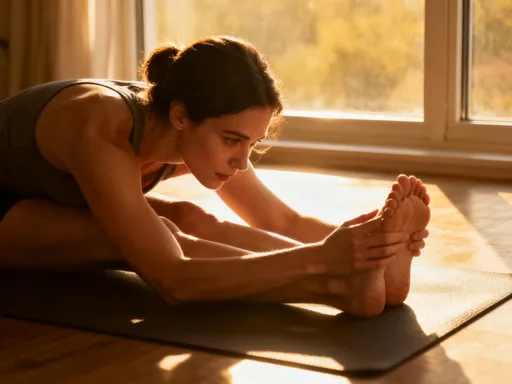
3. Seated Forward Bend: Sit on the edge of a sturdy chair, feet flat on the floor. Inhale to lengthen the spine, then exhale as you hinge at the hips to reach toward the toes. Keep the back straight and avoid rounding. This stretch targets the lower back and hamstrings.
4. Gentle Spinal Twist: Still seated, place the right hand on the back of the chair and the left hand on the right thigh. Inhale to sit tall, exhale to twist gently to the right. Hold, then switch sides. This promotes spinal fluidity and eases stiffness in the mid-back.
5. Chest Opener: Clasp hands behind the back, straighten arms, and lift slightly while opening the chest. This counters the forward slump of daily life.
What made this routine stick was its simplicity and integration into an existing habit. By pairing it with tooth brushing, I leveraged a behavior I already did without fail. I also kept a folded mat visible near my bed, serving as a visual reminder. On busy mornings, I’d do just three stretches — the neck, shoulders, and chest opener — knowing that even a shortened version was better than nothing. The key wasn’t perfection; it was presence.
Not Just Flexibility: The Unexpected Perks I Didn’t See Coming
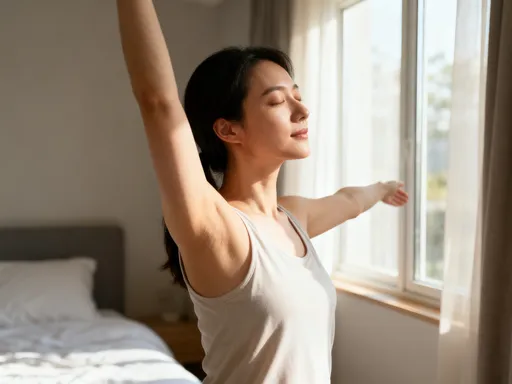
While improved flexibility was welcome, the most surprising benefits were mental and emotional. I began to notice a calmer, more centered start to my day. The rhythmic breathing and focused movement created a quiet space — a kind of moving meditation that helped me transition from sleep to wakefulness without rushing. Instead of grabbing my phone and diving into emails, I spent a few minutes tuning into my body, which set a more intentional tone for the hours ahead.
Reduced mental stress was another unexpected outcome. Physical tension and emotional stress are deeply interconnected. When muscles are tight, the body signals the brain that something is wrong, triggering low-level anxiety. Releasing that tension sends a calming message: You are safe. You can relax. Over time, I found myself less reactive to daily frustrations — a delayed appointment, a spilled drink, a miscommunication — because my baseline level of tension had decreased. I wasn’t just more flexible; I was more resilient.
Better sleep followed naturally. On days I stretched in the morning, I often felt more relaxed at night, falling asleep faster and waking with less stiffness. While stretching before bed can also be beneficial, I found morning stretching set a healthier tone for the entire 24-hour cycle. My body awareness improved too — I became more attuned to subtle signs of tension, such as jaw clenching or shallow breathing, and could address them before they escalated. This heightened mindfulness extended beyond the stretches themselves, influencing how I sat, stood, and moved throughout the day.
Common Mistakes Beginners Make — And How to Avoid Them
One of the most frequent errors is bouncing during a stretch, known as ballistic stretching. This erratic movement can trigger the muscle’s protective reflex, leading to micro-tears or strain. Instead, smooth, controlled motion is safer and more effective. Another common issue is holding the breath. Breathing shallowly or pausing altogether increases tension and limits the stretch’s effectiveness. Coordinating slow inhales and exhales with movement helps the body relax into the stretch and enhances oxygen delivery.
Pushing too hard is another pitfall. Many beginners believe that more pain equals more progress, but this is a dangerous misconception. Stretching should never cause sharp or shooting pain. A mild pulling sensation is normal; discomfort that makes you flinch or tense up is not. The goal is gradual improvement, not immediate results. Listening to your body’s signals is essential — “feels tight” is different from “feels injured.”
Other mistakes include skipping warm muscles, especially in cooler environments, and expecting rapid changes. Cold muscles are less pliable and more prone to strain. A brief walk or light movement before stretching can make a significant difference. Additionally, tracking progress by how far you can reach is less helpful than noticing functional improvements — such as easier movement, reduced stiffness, or better posture. Keeping a simple journal with notes like “felt looser today” or “less shoulder tension” provides meaningful feedback without pressure.
Making It Stick: Turning Stretching Into a Lasting Habit
Sustainability is the true measure of success. Many people start strong but lose momentum when life gets busy. The secret lies in making the habit as frictionless as possible. Start small — even two minutes counts. Anchor the routine to an existing behavior, like making your morning tea, finishing your shower, or sitting down with your coffee. This habit stacking approach increases the likelihood of consistency.
Environmental cues are powerful. Keep a mat, towel, or pair of comfortable clothes in plain sight. Set a gentle reminder on your phone with a neutral message like “Time to move” rather than a demanding alarm. On days when energy is low, give yourself permission to modify — a few seated stretches while watching the news is still valuable. The goal is not intensity but continuity.
It’s also helpful to shift your mindset from “I have to stretch” to “I get to move.” This small reframe transforms the practice from a chore into a gift — a moment of care in a demanding day. Celebrate small wins: notice when you stand up straighter, when a movement feels easier, or when you catch yourself releasing tension before it builds. These quiet victories accumulate into lasting change.
Over time, stretching becomes less of a routine and more of a ritual — a daily act of listening to your body and honoring its needs. It doesn’t require expertise, equipment, or hours of time. It asks only for a few minutes of your attention and a willingness to show up, breathe, and move gently. The benefits extend far beyond the physical; they ripple into how you feel, think, and engage with the world.
Stretching isn’t a magic fix, but it’s one of the most accessible tools we have to feel better in our bodies every single day. Over time, those small moments add up — not just in flexibility, but in how we carry ourselves, move through life, and respond to stress. You don’t need to be an athlete or spend hours. Just show up, breathe, and move gently. Your future self will thank you.