After Sharing 12 E-Books With My Sister, We Finally Stopped Repeating the Same Advice
Have you ever recommended a book to someone you care about, only to realize they forgot half of it by next week? I did—until my sister and I started using e-book readers to share not just titles, but highlights, notes, and real insights. It wasn’t about reading more. It was about growing together. What began as a simple habit transformed how we communicate, remember, and support each other. This is how technology quietly strengthened our bond—and how it can do the same for you.
The Moment We Realized We Were Talking in Circles
It started with something small—a text from my sister that read, “I know you told me this before, but what was that book called? The one about managing stress?” I sent her the title again, just like I had three months prior. Then it hit me: we were having the same conversations over and over. We both loved personal growth, read self-help books religiously, and wanted to support each other. But somehow, the advice slipped through the cracks. We’d talk for an hour about a chapter, then weeks later, one of us would bring it up again like it was new. It wasn’t that we didn’t care. We did—deeply. It was that our conversations lacked continuity. We were trying to build a bridge of wisdom, but we kept laying down planks that disappeared overnight.
Then, one rainy weekend, I lent her my e-reader. She’d been curious about the device, and I thought it might make reading easier with her busy schedule. When she returned it a few days later, I opened my library out of habit—and froze. There, in a book I’d highlighted heavily on emotional resilience, were new notes. Not just hers, but replies to mine. Next to a passage I’d underlined about setting boundaries, she’d written, “This is so us.” Next to another, she added, “Remember this when Aunt Carol calls.” My heart did a little flip. This wasn’t just a borrowed device. It was a conversation. And for the first time, our learning wasn’t fading. It was being saved, shared, and built upon.
We both realized it at once: we weren’t repeating ourselves because we weren’t listening. We were repeating because we had no shared space to store what mattered. Texts got buried. Voice notes were forgotten. But this—this was different. The e-reader had become a quiet keeper of our growth, a place where ideas could live beyond a single chat. We didn’t need to re-explain everything. We could point to a highlight and say, “This is what I meant.” And just like that, our circular talks began to spiral forward.
From Books to Shared Understanding
Before the e-reader, our book talks happened in fragments—over coffee, during grocery runs, in the five minutes before a Zoom call with the kids. We’d try to summarize entire chapters, but something always got lost in translation. The tone, the context, the emotion behind a powerful line—it rarely survived the retelling. I’d say, “There’s this part about self-worth,” and she’d nod, but I could tell she wasn’t feeling it the way I had. The magic of the original moment was gone.
Then came the shift. Instead of summarizing, we started sharing the actual experience. Using a cloud-synced e-reader, we could send each other digital copies of books we loved. But more than that—we could see each other’s highlights and notes in real time. When she read a book I’d marked up, she didn’t just get my opinion. She got to walk through the text exactly as I had, seeing where I paused, what made me underline, where I laughed or sighed. It was like reading over my shoulder, but in the most comforting way.
And when she added her own thoughts in the margins? That’s when the real connection sparked. One evening, I opened a book we were both reading and found her note next to a line about forgiveness: “I think about Mom here too.” I hadn’t even mentioned my mom in our chats, but there it was—her mind meeting mine in the quiet space between the words. We didn’t need to have a heavy conversation that night. The note said enough. The e-reader wasn’t just a tool for reading. It became a bridge for understanding, a place where our thoughts could meet without the pressure of performance or perfect timing.
What surprised us most was how this changed the quality of our actual conversations. We weren’t spending time rehashing summaries. Instead, we were building on them. “You saw my note about boundaries, right?” I’d ask. “Yes,” she’d say, “and I’ve been thinking about how that applies to your job.” We were going deeper, faster, because the foundation was already laid. The technology didn’t replace our talks. It prepared us for better ones.
How Highlighting Became a Language of Care
I used to think highlighting a sentence was a neutral act—something you did to remember a useful tip. But I’ve learned it’s anything but neutral. The way we highlight, what we choose to mark, and even how often we do it tells a story. When my sister started leaving notes in books I’d shared, I began to see them as messages. A highlight on a passage about patience wasn’t just about the text. It was her saying, “I’m thinking of you. I know this is hard right now.”
One night, I noticed she’d underlined a section about letting go of perfectionism—something I’d been struggling with after launching my online course. The next morning, my phone buzzed. “You okay?” she wrote. “Saw your tags on ‘perfectionism’—felt like you were carrying something.” I hadn’t told her I was stressed. I hadn’t even realized how much it was weighing on me. But the pattern of my highlights gave it away. In that moment, I understood: our e-reader wasn’t just storing information. It was storing care.
And it worked both ways. When I saw her highlight a quote about grief, I knew she was processing something about our mother’s passing. I didn’t bombard her with questions. I just sent a simple voice note: “I saw that part too. It got me.” We didn’t need to dissect it. The shared text held the space for us. The act of highlighting had become a gentle way to check in, to say, “I’m here,” without demanding a response. It was low-pressure, high-impact emotional support—exactly what busy women like us need.
What’s beautiful is that this didn’t require grand gestures. No scheduled calls, no long emails. Just a few taps on a screen, a sentence underlined, a note left behind. And yet, those small acts built up into something powerful: a quiet, ongoing conversation about what matters. We weren’t just learning from books. We were learning from each other, in real time, across miles and busy schedules.
Organizing Wisdom So It Stays Useful
Here’s the truth: we’ve all bookmarked a page or taken a note we never looked at again. I had folders on my phone full of screenshots of inspiring quotes, voice memos of ideas, and PDFs I swore I’d read “next week.” But without a system, wisdom gets lost. It’s not enough to collect insights. We have to make them findable.
So my sister and I got intentional. We started creating shared collections in our e-reader library. Simple names, but powerful meanings: “For When Life Feels Heavy,” “Conversations We Need to Have,” “Books That Changed Us.” Each time one of us added a book or a highlight, the other got a gentle notification. It wasn’t spam. It felt like a nudge from a friend who knows you well.
We also began using tags—short, personal labels like “anxiety,” “parenting,” “money stress,” or “joy.” When I was overwhelmed with my teenager’s attitude, I could search “parenting” and instantly pull up every passage we’d both marked on patience, boundaries, and connection. It wasn’t just information. It was context. It was memory. It was us, talking through the pages.
One of my favorite collections is called “The Mom Files.” It started after we both re-read a book about raising confident daughters. We began adding highlights from anything that reminded us of our own moms—the good, the hard, the lessons we’re still unpacking. Now, when one of us is struggling with a parenting decision, we often say, “Check the Mom Files.” It’s become our go-to source of comfort and clarity. And the best part? It grows with us. Every new highlight adds another layer to our shared understanding.
This system didn’t take hours to build. We started small—just one shared list, a few tags. But over time, it became our living library of wisdom. No more forgetting. No more repeating. Just a place where what we’ve learned stays useful, accessible, and deeply personal.
Making Time for Growth—Without the Pressure
Let’s be honest: life is full. Between work, kids, aging parents, and the endless to-do list, finding time to read—even for pleasure—can feel like a luxury. I used to think personal growth required big chunks of time: a weekend retreat, an hour-long podcast, a journaling session that never quite happened. But what my sister and I discovered is that growth can happen in the small spaces.
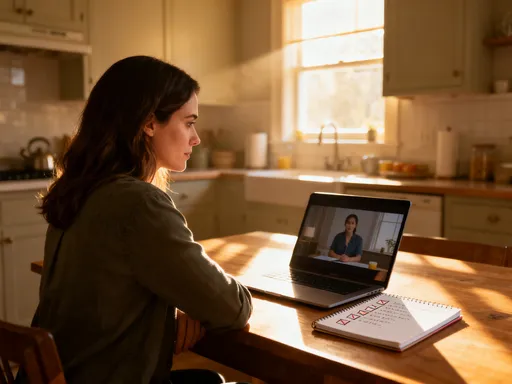
The e-reader made that possible. She reads at 10 p.m. after the kids are in bed. I read during my lunch break or on the treadmill. We don’t have to sync our schedules. We don’t have to finish a book at the same time. And we certainly don’t have to discuss it the moment we close it. The beauty of asynchronous reading is that it respects our rhythms. I can read a chapter, highlight a line, and know she’ll see it when she’s ready. She can add a note, and I’ll find it when I need it most.
This changed everything. No more guilt about not reading fast enough. No more pressure to “keep up.” Just the quiet knowledge that we’re both moving forward, in our own way. And when we do talk, it’s not about catching up. It’s about connecting. “I saw your note about self-care,” I told her last week. “Made me rethink my whole weekend.” That kind of impact doesn’t come from speed. It comes from resonance.
What I love most is that this method fits into real life. You don’t need a perfect morning routine or a silent house. You just need a few minutes and a device that holds your thoughts. And over time, those small moments add up to real change. We’re not reading more books. We’re getting more from the ones we do read—because we’re not doing it alone.
When Technology Supports, Not Replaces, Real Talk
I’ll admit, I was skeptical at first. Does sharing digital notes really deepen a relationship? Or does it just make us more dependent on screens? I’ve heard the warnings: technology pulls us apart, replaces real connection with shallow interactions. But what I’ve experienced is the opposite. Our e-reader hasn’t replaced our calls. It’s made them richer.
Before, we’d spend the first ten minutes of a call recapping what we’d read. Now, we dive straight into reflection. “You saw my note about boundaries, right?” I’ll say. “Yes,” she’ll reply, “and I’ve been thinking about how that applies to your job.” We’re not explaining. We’re exploring. The technology did the groundwork, so we can go deeper.
And here’s the thing: it doesn’t feel digital. It feels human. When I see her handwriting-style notes in the margin, it’s like she’s sitting beside me. When I tap on a highlight and see her timestamp—“added at 10:14 p.m.”—I can picture her in her favorite armchair, tea in hand, thinking of me. It’s intimate in a way I didn’t expect.
The e-reader isn’t a substitute for our bond. It’s a support for it. Like a recipe box passed down from our grandmother, it holds pieces of our lives, our values, our growth. But unlike a physical box, it’s alive. It updates. It grows. It connects us across time and distance. And most importantly, it reminds us that we’re not alone in trying to be better, do better, live better.
Building a Legacy of Learning—Together
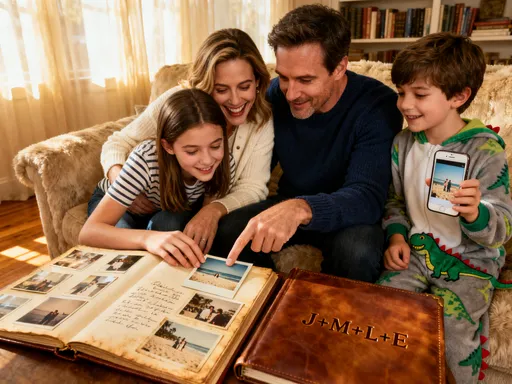
Someday, I’d like my daughter to open a folder labeled “For When You Need Strength” and find a collection of books her aunt and I shared. I want her to see our highlights, read our notes, and feel how much we cared—not just about the ideas, but about each other. What started as a way to stop repeating advice is becoming something lasting: a legacy of learning, love, and sisterhood.
We’ve started compiling our favorite shared books into a digital archive. Not just the titles, but the highlights, the notes, the moments that moved us. We’re adding voice recordings sometimes—short reflections on why a book mattered. It’s not for social media. It’s not for fame. It’s for the women who come after us. For anyone who’s ever felt overwhelmed, unsure, or alone in their growth.
I used to think legacy was about big accomplishments—careers, awards, public recognition. But now I see it differently. Legacy can be quiet. It can be a shared library of underlined sentences and margin notes. It can be the way one sister’s highlight helps another breathe a little easier on a hard day. It can be proof that care doesn’t have to be loud to be powerful.
And the most surprising part? It all started with a simple tech tool—one that I once thought was just for reading on the beach. But in the hands of two women who wanted to grow together, it became something more. It became a vessel for connection, a keeper of wisdom, a bridge across time.
If you’re looking for a way to deepen a relationship, to feel more supported, to make your personal growth matter beyond yourself—consider this. Pick a book you love. Share it with someone who matters. Leave a highlight. Add a note. Say, “This made me think of you.” You don’t need a grand plan. You just need to begin. Because sometimes, the smallest digital gesture can spark the deepest human connection. And in a world that often feels too fast, too loud, too disconnected—those quiet moments of shared understanding might be exactly what we need.