What If Your Home Could Capture Life’s Most Precious Moments—Without You Lifting a Finger?
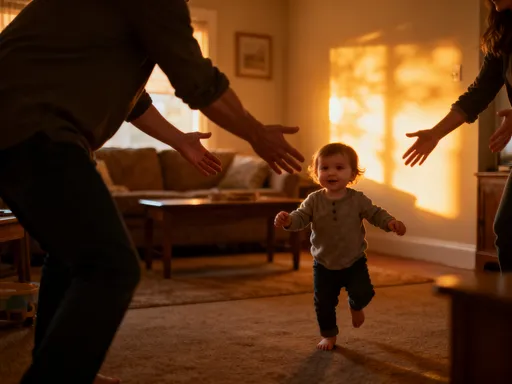
Imagine your child’s first steps, a quiet laugh between grandparents, or a surprise birthday hug—preserved not because you remembered to hit record, but because your home quietly knew it mattered. These aren’t staged clips from a movie. They’re real, fleeting moments that slip away too fast. We’ve all been there—watching a toddler wobble into a room with a proud grin, only to realize too late that our phone is charging in another room. By the time we grab it, the moment’s gone. What if the technology meant to keep your family safe could also help you *remember* them—naturally, effortlessly? What if your home didn’t just protect you, but also cherished you?
The Moments We Never Mean to Miss
We don’t just remember big milestones—we remember the in-between. The way your daughter hums to herself while drawing at the kitchen table. How your husband sighs with contentment when he finally sits down after a long day. The way your mom’s eyes crinkle when she laughs at something silly on TV. These are the textures of a life well lived, the quiet rhythms that make a house feel like a home. And yet, they’re the easiest to lose.
Think about how often you’ve reached for your phone to capture something sweet, only to realize the magic has already passed. Or worse—when you *do* manage to record, the act of filming changes the moment. The kids pose. The laughter becomes performative. The spontaneity vanishes. It’s not that we don’t care. It’s that we’re human. We’re tired. We’re distracted. We’re busy living.
And then there are the moments we don’t even see coming. A grandparent whispering a secret to a grandchild. A teenager, usually quiet, suddenly breaking into song while walking down the hall. These aren’t events you can schedule or plan for. They happen in the background of life—while you’re making dinner, folding laundry, or just staring out the window, lost in thought. That’s why they matter so much. They’re real. Unfiltered. And they’re slipping through our fingers every day.
Photos and videos help, of course. But they’re reactive. They depend on us to act. What if technology could be proactive? Not in a creepy, always-watching way, but in a gentle, thoughtful way—like a friend who quietly hands you a tissue when you’re about to cry. What if your home could do that? Not just notice when something’s wrong, but also when something’s *right*?
Safety Tech That Does More Than Alert
Most of us think of home monitoring systems as tools for emergencies. A fall detected. A door left open. A strange noise in the middle of the night. These systems were built to protect—especially for families with aging parents or young children. And that’s important. But what if they could do more than just warn us? What if they could also *witness*?
Modern smart home sensors—motion detectors, sound analyzers, door and window sensors—are already in millions of homes. They work quietly, often unnoticed, tracking patterns to spot anomalies. But here’s the thing: these systems don’t just see danger. They see life. They notice when the house wakes up. When the dog starts barking at the mail carrier. When the kids come home from school, backpacks thudding on the floor. They’re present in the background, not with cameras or constant video, but with subtle awareness.
And that awareness can be repurposed—not for surveillance, but for celebration. Imagine a system that knows when the living room lights up with activity, when voices rise in laughter, when the piano in the corner gets played after months of silence. These aren’t security threats. They’re emotional signals. And with the right design, the same technology that alerts you to a fall can also recognize a hug, a song, or a shared joke.
The key is intentionality. These systems don’t record everything. They don’t store video by default. Instead, they use anonymized data—patterns of movement, sound levels, timing—to detect shifts in behavior. When the system senses something unusual in a positive way—a burst of laughter in the kitchen at 7 a.m., a child running to the door when a parent comes home—it can gently trigger a short audio or video clip, only if you’ve chosen to enable that feature. No intrusion. No pressure. Just presence.
When Technology Learns What Matters
It’s not about artificial intelligence pretending to be human. It’s about pattern recognition that respects human rhythm. Think of it like this: your coffee maker learns when you usually wake up and starts brewing. Your thermostat adjusts to your schedule. Why shouldn’t your home also learn when joy tends to happen?
Over time, smart home systems can recognize routines. They know when the kids get home from school, when the dog starts pacing before dinner, when the family gathers in the living room on Sunday nights. They don’t listen to conversations. They don’t record voices. But they *can* detect changes in sound volume, movement density, and duration of activity. A sudden spike in motion and sound in the kitchen during breakfast? That might be the kids laughing over spilled cereal. A long stretch of quiet presence in the living room with soft music? That could be a cozy moment worth remembering.
These systems use what’s called “behavioral baselining.” That’s a fancy way of saying they learn what normal looks like in your home. Once they know the baseline, they can spot deviations—not just dangerous ones, but joyful ones too. A grandparent staying in the playroom longer than usual with a grandchild. A teenager lingering at the kitchen counter to talk instead of rushing off. These small shifts can signal emotional significance.
And when they do, the system can automatically save a short, gentle clip—say, 15 to 30 seconds of audio and video, only in areas you’ve approved. You don’t have to lift a finger. No more fumbling for your phone. No more missing the moment because you were trying to capture it. The technology becomes a silent partner in memory-keeping, not a distraction from the experience itself.
Real Stories: The Hug After the Fall, The Song Before Bed
Let me tell you about Maria, a mom of two in Ohio. She had a smart safety system installed after her mother moved in following a stroke. It was meant to alert her if her mom fell or wandered at night. But one evening, the system flagged an unusual event—not an emergency, but a moment. Her mother, who had been quiet and withdrawn for weeks, was sitting on the couch with her youngest grandson, humming an old lullaby. The system saved a 22-second clip.
Maria didn’t even know it had happened until she got a gentle notification: “A sweet moment was captured in the living room.” She watched it later, tears in her eyes. That lullaby was the same one her mom used to sing to her when she was a child. It was the first time she’d heard her mother sing in years. That clip became more than a memory. It became a bridge—between generations, between past and present, between loss and love.
Then there’s James, a dad in Portland, who set up his system to monitor for safety when his wife was recovering from surgery. One night, he got an alert—not for pain or distress, but for “unusual activity” in the hallway. He checked the app and found a video: his 8-year-old daughter, in pajamas, doing a silly dance to cheer up her mom, who was laughing from her wheelchair. No one had noticed the system was recording. The moment was completely real.
Or take the Thompson family in Minnesota. They live far from grandparents, and video calls are their main connection. One morning, their system captured their toddler running to the door, shouting, “Grandma’s here!”—only to realize it was just the mail carrier. But the joy on his face, the pure hope in his voice, was priceless. They shared the clip with Grandma, who cried and said, “That’s the sound of love.”
These aren’t staged demos. They’re real families using real technology in real homes. And what they’re discovering is that safety and memory aren’t separate goals—they’re connected. A system that watches for danger can also witness joy, if it’s designed with care.
How to Set It Up—Simple, Private, and Thoughtful
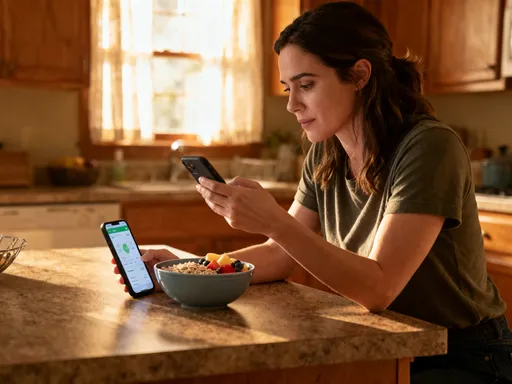
You don’t need to be a tech expert to make this work. In fact, setting it up is no more complicated than connecting a new speaker or syncing a fitness tracker. Most modern smart home systems come with intuitive apps that walk you through the process step by step. The key is starting with your values—what matters to you, what you want to remember, and how you want to feel about privacy.
First, choose a system that prioritizes privacy. Look for one that stores data locally on your home network, not in the cloud. That means your moments stay in your home, not on a server somewhere. Make sure it doesn’t record video by default—only when a meaningful event is detected and only in rooms you’ve approved, like the living room or kitchen. Bedrooms and bathrooms should always be off-limits unless you choose otherwise (and most families don’t).
Next, define your “meaningful zones.” These are the areas where life tends to happen—where you gather, play, talk, or laugh. You can set sensitivity levels: low for quiet areas, higher for high-activity spots. Some systems let you teach them what “joy” looks like—by marking certain clips as “keep” or “ignore.” Over time, it learns your family’s rhythm.
You can also set sharing preferences. Want to automatically send a clip to Grandma when it captures the grandkids? You can do that—with your permission. Want to create a private family album that only certain people can access? That’s possible too. And you’re always in control. You can delete clips, pause recording, or turn off the feature anytime.
The goal isn’t to turn your home into a studio. It’s to make memory-keeping effortless. Think of it like a digital scrapbook that fills itself—with your permission, on your terms, in your voice.
Beyond the Clip: Turning Moments into Meaning
A saved moment is more than a file. It’s a feeling. It’s a touchstone. Families are using these clips in ways they never expected. Some create monthly “memory reels” to watch together—like a family movie night with their own lives as the stars. Others share them with distant relatives, especially older ones who may not get to see the kids often. One woman sent a clip of her daughter saying “I love you” to her grandmother in hospice care. It became her final comfort.
Therapists are starting to see value in this too. For families dealing with dementia, these clips can be part of reminiscence therapy—helping loved ones reconnect with who they are and who they’ve loved. A simple video of a grandchild laughing can spark a conversation, a memory, a smile. In grief counseling, these moments can help people process loss, not by replacing presence, but by honoring it.
Schools and pediatric therapists working with children on the autism spectrum have used similar systems to help kids recognize emotional cues. Seeing themselves laugh, cry, or hug can be a powerful tool for self-awareness. And for parents, these clips can be a mirror—showing them not just what their kids did, but how they responded. Did I smile when my child showed me their drawing? Did I put down my phone? These moments hold us accountable in the gentlest way.
And then there’s gratitude. So much of modern life pulls us toward what’s next—what we need to do, buy, fix, or achieve. These clips pull us back to what’s *here*. They remind us that joy isn’t always loud or planned. It’s in the ordinary. The messy. The unscripted. They help us slow down, even if just for 30 seconds, and say: this mattered.
A Home That Cares—And Remembers
We don’t just want smart homes. We want *kind* homes. Homes that do more than adjust the temperature or lock the door. Homes that notice. That care. That remember. Technology has given us convenience, security, and connection. But it’s time it gave us something deeper—emotional resonance.
Imagine a future where your home doesn’t just protect you from harm, but also preserves what matters most. Where the same sensor that alerts you to a fall also captures the hug that follows. Where the system that knows when someone’s in distress also knows when someone’s joyful. That’s not science fiction. It’s already happening—in living rooms, kitchens, and hallways across the country.
This isn’t about replacing our memories. It’s about supporting them. Our brains are amazing, but they’re not perfect. We forget. We miss things. We get tired. Technology can’t love for us. But it can help us love better—by holding onto the moments we might otherwise lose.
And in a world that often feels too fast, too loud, too distracted, that’s a gift. Not because we need more screens or more data, but because we need more meaning. More connection. More proof that we were here, that we mattered, that we were loved.
So the next time you hear laughter down the hall, or see a child running toward a parent with arms wide open, remember: you don’t have to chase the moment. You don’t have to pull out your phone. You don’t have to choose between living and recording. Because your home might already be holding it for you—quietly, gently, with care.
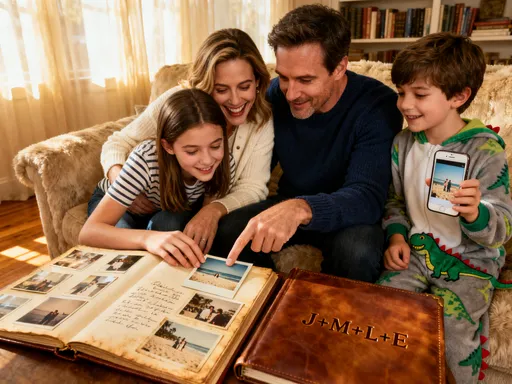
And one day, when you’re sitting together, flipping through a year of captured moments, you’ll realize something simple and profound: this was your life. Not the curated version. Not the filtered one. But the real one. The messy, beautiful, fleeting, unforgettable one. And it was seen. It was heard. It was remembered.