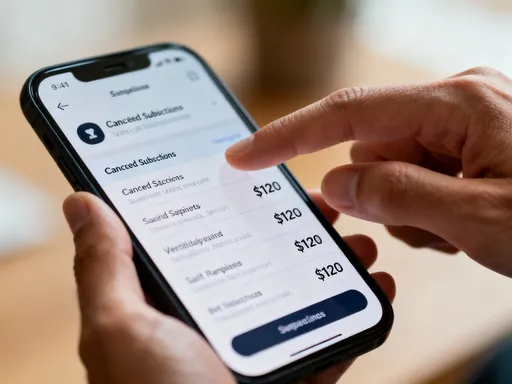
Stopped Overpaying for Forgotten Subscriptions: How One Click Saved Me $120 a Month
You know that nagging feeling when you check your bank statement and see charges for things you don’t even use? I did too—until I discovered a simple tool that revealed exactly what I was paying for. It found subscriptions I’d completely forgotten about, like an old fitness app and a trial service I never canceled. Within minutes, I canceled three and saved over $120 a month. This isn’t about cutting out coffee or living frugally—it’s about reclaiming money you’re already giving away. And the best part? It takes less effort than making a grocery list.
The Sneaky Drain on Your Wallet: When Subscriptions Add Up Without You Noticing
Let’s be honest—how many times have you signed up for a free trial, told yourself you’d cancel before it ended, and then completely forgotten about it? I’ve done it more times than I’d like to admit. That one-month yoga app trial? Still showing up on my bill 11 months later. The premium music service I used during a road trip? Forgotten until I saw the charge again this month. These aren’t huge amounts individually—$7 here, $15 there—but they stack up without us even noticing. It’s not overspending on groceries or impulse buys at checkout. It’s something quieter, more invisible: subscription creep.
Subscription creep is that slow, silent buildup of recurring charges that blend into the background of your monthly expenses. You don’t feel the pinch right away because each one feels small. But when you add them all up? That’s real money—money you’re handing over for services you don’t use, don’t remember, or didn’t even know you were still paying for. I used to think I was careful with my budget. I tracked my bills, planned meals, and compared prices at the store. But I wasn’t tracking the digital part of my life—the apps, the memberships, the trials that turned into permanent charges. And I wasn’t alone. So many women I talk to—moms, professionals, retirees—tell me the same thing: “I didn’t realize how much I was paying until I actually looked.”
What makes this so tricky is how seamless it all feels. You sign up with a credit card, and suddenly, years later, you’re still paying. No reminder, no warning. Just a quiet deduction every month. And because it’s automatic, it doesn’t feel like spending. It feels like background noise. But here’s the truth: every dollar counts, especially when it’s yours. And when you’re working hard to manage a household, plan for the future, or just keep things running smoothly, the last thing you need is money slipping through your fingers without your permission.
Discovering the Tool That Changed Everything: A Friend’s Simple Recommendation
I didn’t find this solution in a tech magazine or a financial newsletter. I found it over coffee with my friend Lisa, who’s about my age and has two kids just like I do. She mentioned offhand, “I saved over a hundred bucks a month just by cleaning up my subscriptions.” My first thought? “No way. I don’t have that many.” But then she showed me her phone. In less than five minutes, she pulled up a clean, simple list of every subscription she was paying for—streaming services, cloud storage, meal kits, even a meditation app she hadn’t opened in months. “I used this app,” she said, “and it connects right to my bank. No stress, no spreadsheets.”
I’ll admit, I was skeptical. I’ve tried budgeting apps before. Some were too complicated, others wanted me to manually enter every expense. This one was different. Lisa showed me how she linked it to her bank account—just like connecting a rewards card to her phone. No jargon, no confusing settings. It just worked. And within a day of signing up, I had my own list. Not a guess. Not an estimate. A real, complete picture of what I was paying for every month. I didn’t need to be tech-savvy. I didn’t need to spend hours on it. I just needed to take one small step.
What struck me most was how normal it felt. This wasn’t about cutting corners or living with less. It was about clarity. It was about knowing where my money was going. And it was about a tool that respected my time and my life. I wasn’t looking for a financial overhaul. I just wanted to stop losing money on things I didn’t use. And Lisa’s recommendation? It was the kind of practical, real-life advice that only comes from someone who’s been in your shoes. No sales pitch. No pressure. Just, “Hey, this helped me—maybe it can help you too.”
The “Wait, I Pay for That?” Moment: What the App Revealed About My Spending
The first time I opened the app, I wasn’t prepared for what I saw. There it was—my entire digital footprint laid out in one clean dashboard. Some of it made sense: my internet bill, the streaming service the whole family uses, the cloud storage where I keep photos of the kids. But then I saw things I didn’t recognize. A language learning app I used for two weeks during a trip to France—still charging me $12.99 a month. A digital magazine bundle I thought I’d canceled after a six-month promo. A second cloud storage plan—duplicate!—from a different provider I’d signed up for during a work project and never removed.
I actually said out loud, “Wait, I pay for that?” It was equal parts shocking and embarrassing. How had I not noticed this before? The app didn’t just list the subscriptions—it organized them. It showed me renewal dates, how much I was paying annually, and even flagged ones that had increased in price. One service had gone from $9.99 to $14.99 without any notice. Another had switched from quarterly to monthly billing, doubling my cost. I wasn’t just paying for things I didn’t use. I was paying more than I should have been.
But here’s the thing: the app didn’t make me feel guilty. It made me feel empowered. It wasn’t judging me. It was helping me see clearly. And that clarity was powerful. For the first time, I could make decisions based on facts, not assumptions. I wasn’t guessing what I might be paying for. I knew. And knowing gave me control. I realized I wasn’t bad with money—I was just missing information. And once I had it, I could fix it. Fast. That night, I canceled three subscriptions I hadn’t used in months. The next day, I got a confirmation email for each one. No hassle. No runaround. Just results.
Canceling Without the Hassle: How the App Makes It Actually Easy
Here’s what I used to think about canceling subscriptions: it’s a chore. You have to dig through old emails, log into accounts you haven’t touched in years, click through confusing menus, and sometimes even talk to customer service reps who try to talk you out of it. I’ve given up before just because it felt too hard. But this app changed that. Instead of making me do the work, it gave me options—real, simple options. For some subscriptions, there was a one-click cancel button right in the app. For others, it provided a direct link to the cancellation page. No hunting. No guessing. Just a clear path to say, “No, thank you.”
And the best part? It reminds you. A few days before a subscription renews, the app sends a gentle notification: “Your photo editing software renews in 3 days. Want to cancel?” It’s not pushy. It’s not demanding. It’s just there—like a quiet voice reminding you to make a choice. That small window of time makes all the difference. Instead of waking up to a charge you can’t undo, you get to decide in advance. You’re not reacting. You’re leading.
I’ve even started using it for services I do want to keep. I get a reminder, I confirm I still want it, and I move on. No second-guessing. No anxiety. It’s like having a personal assistant for my digital life—someone who knows what I pay for and helps me stay in charge. And the more I use it, the more I realize how much time I’ve wasted in the past, trying to manage this manually. This isn’t just about saving money. It’s about saving mental energy. It’s about removing friction from a part of life that used to feel frustrating and confusing.
Saving More Than Money: The Mental Space and Peace of Mind That Followed
Yes, the $120 a month is nice. I’ve redirected that money into my daughter’s college fund and a little “me time” budget—something I never had before. But the real win? The peace of mind. I no longer dread checking my bank statement. I don’t feel that little knot in my stomach when I see an unfamiliar charge. I know what I’m paying for. I know why. And I know I’m not wasting money on autopilot.
There’s a quiet emotional weight that comes with financial clutter—those unused subscriptions, the forgotten trials, the services you meant to cancel. It’s not just about the money. It’s about the guilt. The “I should’ve known better” feeling. The sense that you’re not quite in control. I didn’t realize how much that was affecting me until it was gone. Now, I feel lighter. More organized. More confident in my choices. It’s like cleaning out a closet you’ve been avoiding for years. Once it’s done, you can breathe easier.
And it’s not just me. I’ve talked to other women who’ve done the same thing—cleared out their digital subscriptions—and they say the same thing: “I didn’t realize how much mental space I was losing.” We carry so much—homes, families, careers, aging parents. The last thing we need is invisible financial stress piling up in the background. This tool didn’t just save me money. It gave me back time, focus, and a sense of calm. It’s a small change, but it ripples through everything else.
Sharing the Win: Helping Family and Friends Find Their Own Hidden Savings
Once I saw how much this helped me, I couldn’t keep it to myself. I told my sister, who’s a busy nurse and mom of three. She was overwhelmed by her kids’ app subscriptions—games, educational tools, music lessons—all signed up under her account. She had no idea how many there were or which ones were still active. I walked her through setting up the app, and within 20 minutes, she’d canceled four she didn’t need. “I had no idea I was paying for two different drawing apps,” she laughed. “One of them my son used for, like, a week.”
I also showed it to my mom, who’s in her early 70s and not what you’d call tech-savvy. She was hesitant at first—“I don’t want to mess anything up.” But I showed her how easy it was to link her bank, and she was amazed at how clear everything looked. She found a digital newspaper subscription she thought had ended years ago and a gardening service she’d forgotten about. “I could’ve bought three new rose bushes with that money,” she said. Now she checks the app every month like it’s part of her routine.
What I love is that this isn’t just for people who love tech. It’s for anyone who wants to feel more in control. It’s for moms, for caregivers, for women building their futures. And the best part? It’s not about cutting out things you love. It’s about keeping what matters and letting go of what doesn’t. When I help someone set it up, I see that moment of relief—the “aha” when they realize they’re not alone, and they don’t have to figure it all out by themselves.
A Smarter, Lighter Life: How Small Tech Choices Lead to Big Changes
Looking back, this wasn’t just about canceling a few subscriptions. It was about changing my relationship with technology. I used to think of apps and tools as things that demanded my attention—notifications, updates, endless choices. But this experience showed me that tech can also be quiet, helpful, and respectful of my time. The best tools don’t shout. They support. They make life easier without adding more to do.
Managing subscriptions isn’t about sacrifice. It’s about intention. It’s about making sure your money is working for you, not the other way around. And when you remove the invisible drains, you gain more than cash. You gain clarity. You gain confidence. You gain the freedom to focus on what really matters—your family, your goals, your peace of mind.
If you’ve ever looked at your bank statement and wondered where your money went, I get it. I’ve been there. But you don’t have to stay there. One small step—a simple tool, a few minutes of your time—can uncover savings you didn’t know you had. And more than that, it can give you back a sense of control in a world that often feels overwhelming. Technology, at its best, should serve your life—not complicate it. And sometimes, the smallest changes make the biggest difference. You’re not just saving money. You’re building a smarter, lighter, more intentional life—one click at a time.